QUÉ EMOCIÓN!!! PARTICIPAMOS EN UN CONCURSO!!!

XIV PREMIOS ESPIRAL - ACEPTAN NUESTRA CANDIDATURA DE PARTICIPACIÓN PARA LA EDICIÓN 2020

Hemos sido aceptados para participar en la modalidad de ABP en los XIV Premios Espiral. Os imagináis poder lograr tan prestigioso galardón?...

Monday, 8 April 2019

Liberal News - Unit 4

Bomb at the "Liceo Theatre"


The past 7th of November took place an anarquist attack against the bourgoise of the Condal city.  What happened? Who really provoked it?


It was the evening of the 7th of November when an unexpected event terrified the city of Barcelona. The Liceo theatre was crowded with important figResultado de imagen de bomba en el liceoures of the city eager to attend one of the most anticipated releases; the theatre opened its doors to present "Guillermo Tell", the last opera of Rossini. It was around the 11 p.m when two bombs Orsini were thrown from the fifth floor to the stalls, although only one of them bust (the other one was cushioned by an already deceased spectator). It killed 22 people and injured 35. The authorities related this to an anarchism plot.


We talk with some testimonies and they have described the event as something frightening; "I went down to the seats. In the theater , large, full of light, the rigid bodies were seen, others were giving the last gaps. There were wounded screaming and unconscious ladies, also a girl between ten or twelve years old dead. Some musicians from the orchestra with their white bibs soaked in blood, helped to move the wounded... it was imposing", pronounced by Aurora Roja.

But, who caused the attempt? 

It was the 2th of January, when after a great investigation  the police found that Santiago Salvador was the author of the attempt. 

We  could talk with one of the policeman and he told us with details how Salvador carried out the attack.


Santiago Salvador

"He entered to the Liceo through the door that led to the Street of San Pablo with the two bombs in the belt, under the blouse. He went up to the fourth or fifth floor and stayed in the hall, where he could see the people, happy and full of enthusiasm and he thought that it was the right moment to act. He avanced one arm and the the other and the two bombs fell into the yard.

After the attack he went to Castelserás for Tortosa and Gandesa and they fled to Zaragoza where we caught him, after he tried to commit suicide by shooting himself in the stomach."

He was imprisoned in solitary cinfinement on February 1st and  he´s now waiting to be judged on the trial that will take place on April 11th.


The 4 Enlighteners Unit 4


ADVANCES ARRIVE BY RAILWAY


9th October 1848 


The event has been confirmated: next 28th October will take place the first Spanish railway's inauguration. Several tests have been made to prove the mechanism works perfectly, but... how does this new machine come to the Iberian Peninsula?


Eleven years ago, emerged the railway line in Cuba, joining the cities of  La-Habana and Güinea. The development of this transport line was facilitated by Miquel Biada, a young business man who get richer by the slaves trade. He lost his fortune in Venezuela when the country became independent. Then, he travelled to Cuba looking for recovering his money and finally he achieved it.  

The success of the company he was member of in Cuba, led him to bring the project of the railway to Spain.


However, it was difficult to carry the railway to the Iberian Peninsula, because there wasn´t too many people that support the project and invest on it. Some people also say that this transport causes illnesses and its smoke is bad for the health, or that the sparkles could cause fires. Despite the project has suffered some sabotage, it has remained firm.


It is expected that the trip from Barcelona to Mataró lasts 35 minutes. It will transport around 400 people, among whom Miquel will not be found because of his recent death a few months ago. Therefore, Miquel won´t be able to see his dream come true.


This event will be an act that will mark a new era in Spain, because it represents the progress of the country and how the Spanish Peninsula is making giant steps to catch the european industry and the advances in all the world. We hope the bourgueoise would like the project and support financially the industrialization of our beautiful country.


The Militia 4

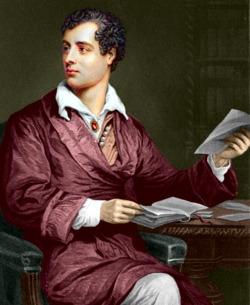
LORD BYRON SCANDALIZES LORDS


Last 27th February, in The House of Lords (London), must examine a proposed law, alredy adopted by The House of Commons, which establishes the death penalty for breaking machines (luddites attacks), but a young poet, will be the only opponent.


Resultado de imagen de LORD BYRON 
This young man is Lord Byron and he is a great poet and writer. He was born 22th January 1788 (London). 

He had a strong advocate of social reform, he received particular praise as one of the few Parliamentary defenders of the Luddites: specifically, he was against a death penalty for Luddites.
                 
                  What was Byron's role in parliament?

As a member of the House of Lords, Byron attended 15 sessions, and spoke three times, always from a Whig position. In this speech, against a bill calling for the death penalty for frame-breakers, he is often ironic, but passionate in his defence of the protesting workers. 


      WHO ARE THE LUDDITIES?

Its origins date back to  the 19th century labor movement that railed against the economic fallout of the Industrial Revolution.

The original Luddites were British weavers and textile workers who object to the increased use of automated looms and knitting frames. Most were trained artisans who had spent years learning their craft, and they feared that unskilled machine operators were robbing them of their livelihood.


THE SPEECH

From 1811 the introduction of power-driven mechanical frames for the manufacture of stockings sparked off a series of protests around Nottingham, after groups of skilled labourers had lost work as a result of the new technology. Using the name ‘Luddites’, from an imaginary leader, Ned Ludd, they broke into workshops at night and smashed up the frames. The police and military were brought in to find and arrest Luddites, for the most part unsuccessfully, as shown here in Lord Byron's speech.


Wednesday, 3 April 2019

DIDEROT NEWS: UNIT 4

THE BAKUNIN-MARX SPLIT END WITH THE INTERNATIONAL


The inequalities and differences among marxists and anarchists has ended with the International. ¿Is there going to be a second one?


Our reporters have visited St Martin´s Hall two hours ago, we have talked with some member and in conclusion, due to the wide variety of philosophies present in the First International, there was conflict from the start, the conflict has been increaing all that time and the bomb has explote.

The first objections to Marx's influence came from the mutualists, (who opposed communism and statism) but even with the mutualists facing marxists, Marx and Bakunin became the figureheads of two different camps: Marxists and Anarchists respectively.
But they did not agree in anything, perhaps the clearest differences between the groups emerged over their proposed strategies for achieving the elimination of the class-based society and  the establishment of a communist society:  
Marchists wanted to achieve this goal through the class struggle in which the working-class would gain political power for establish then a proletariat dictatorship and they would finally to impose a communist society and economy.
On the other hand, anarchists would achieve it through individual freedom in which they would fight against any authority or institution that limited individual freedom by means of terrorists attacks,they would be organised into independent communes without a state or any political party.

The anarchists grouped around Bakunin favoured, in Peter Kropotkin´s words "direct economical struggle against capitalism, without interfering in the political parliamentary agitation" and Marxist thought was focused on parliamentary activity.

We have had the pleasure to talk with Marx, the leader of the marxists, here you have a short interview:

REPORTER: Good morning Marx! Thank you for giving us some minutes. Well, what is your opinion about the end of the International?

MARX: Good morning! It is a pleasure. To be honest, I expected it be because the differences between Bakunin and me were obvious.

REPORTER: Can you talk about that differences? Just the most important ones.

MARX: Ha ha ha, one day we had the greatest discussion, we were talking about the establishment of the proletariat dictatorship; I supported this measure because if our purpose is to end with the class-based society, the first step is to take the power and then make and equal society. But Bakunin said that if we take the power we wouldn´t leave it because is a very good advantage.

REPORTER: Don´t you think that maybe Bakunin was right?

MARX: Perhaps, but we won´t know it now.

REPORTER: Okey, that´s true ha ha ha. I hope to see you soon Marx.

MARX: Me too! Goodbye!

REPORTER : Bye!


THE ROYAL FAMILY UNIT-4


The Steam Machine.


We´re going to talk you, reader about the invention that have changed our world: The steam machine.

Its history.

James Watt
We know that the initial patent owned to Thomas Savery in 1698, that was a document in where there wasn´t any practical information. It was a steam water pump called Miner´s friend. Later, in 1712, Thomas Newcomen developed a better design of a steam machine based in Savery´s idea, but the machine we know was developed by James Watt, or that is what we have been told. Now, we are going to tell you all the truly history of the steam machine.
Thomas Newcomen
The first record we have comes from the Egyptian civilization in a scripture of Heron of Alejandria named Spiritalia seu Pneumatic. There, it is described a baby steam machine that will have to be developed through the pass of the time to become the one we know nowadays.
It is also said that in 1543 Blasco de Garay, a Spanish marine officer, tried to boost a ship with a steam machine there is no data of the motor, but on Simancas archive it is described that event.
In 1601 Giovanni Battista della Porta describes a machine to boost water through fire similar to Heron´s one. Some years later, in 1606, Jerónimo de Ayanz y Beaumont registered the first patent of a steam machine that has been used successfully.
But all of this were no more than antecessors. the current one we know was invented by Edward Somerset on 1663. It was developed with the purpose of raising water yo the upper floors of the Rawlan´s Casttle. However, he can´t afford producing and selling his machines, and he died on poverty. This is probably the fact that makes the invention attributed to Thomas Savery which was later improved by James Watt. 
Now it is time recognized Somerset invention and never again outshine his name. He was the Truly inventor of the steam machine.

Edward somerset

How does it work.

For you all who don´t know much about it, the steam machine is an appliance that burns coal to break free the thermal energy that it contains.
In a boiler a certain amount of water is seethed incessantly. After being heated by various fuels such as wood, coal or oil, it boils. When it is boiling, the steam generated is concentrated by making a high pressure and in that state, it is directed to a closed chamber. The steam from the boiler enters into the chamber, where there is a cylinder, which, by expanding the volume of the water, pushes a piston that generates a movement of translation or rotation.

The basic parts of the steam engine in a locomotive would be a boiler, slide valve, cylinder, steam reservoir, piston and a drive wheel.


Wednesday, 13 March 2019

The 4 Enlighteners Unit 3

50 YEARS OF MYSTERY

Can you find the murderer?


General Prim
Today, December 30th 1920, we look backward to El Turco street, where fifty years ago took place the mysterious murder of General Prim. The facts still situate us on one of the strangest crimes in all the spanish history. His death caused a weakness in the government of Amadeo of Saboy and led into his abdication. Let's review the events.

Everything happened in a cold winter afternoon. Prim was travelling to the congress when suddenly a catastrophe took place. An unknown group of people was getting closer to his carriage with clear intentions:

willing to everything to end with his life. It occured very fast, according to the witnesses, they entered in the chariot when it stopped, and started shooting. He got injured on his left arm and immediately transported to his house in Madrid, where a doctor took care of him, but it was too late. 
Prim had died apparently due to the bullet wounds. However, there is a second theory supported by scientific studies which have discovered that Prim could have died by a breath constriction after the assault.

Francisco Serrano
Although 50 years have passed, it remains the doubt of who killed him. On one hand, as Prim wanted Spain to be a constitutional and parliamentary monarchy, he gained the republicans' hostility. Also Prim did not want a Bourbon to be the government head and Duke Montpensier believed himself worthy of the crown, so Prim gained more enemies. The main suspect was Francisco Serrano, who wanted to be King of Spain but Prim wanted a foreign king and refused to trust Serrano despite having spent a lifetime working together, but... who do you think is responsible for this mysterious murder?


Monday, 11 March 2019

DIDEROT NEWS: UNIT 3


THE END OF THE LIBERALS IS COMING

May 26, 1823

Ferdinand VII about Angouleme said: "My august and beloved cousin, the Duke of Angouleme, leading a brave army, winner in all my domains, took me out of the slavery in which he moaned, restoring my beloved vassals, faithful and constant"

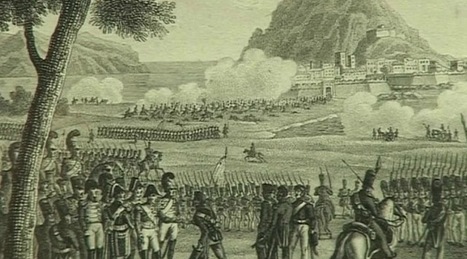
Last Saturday, May 24th, sixty thousand soldiers and the same number of mercenaries crossed the cities and fields of Spain until they reached Madrid.


They came from France to put an end to the Liberal Triennium and return the power to Ferdinand VII. 


It seems that there were 95062 men and they called them one hundred thousand, to give 

a round number.

In this flowerish May and the struggle that we are living, the invasion of the 100000 Sons of Saint Louis supposes a good business for everyone, except for the common people that suffer its attacks.


Resultado de imagen de 100000 hijos de san luis
"100000 Sons of Saint Louis arrive to Spain"

The Duke of Angouleme was in command of the invading army. He had left France with his parents in 1789, due to the Revolution, to save their lives.

His army was endowed with five corps, unlike the Spanish constitutional army, which consisted on four corps of 20,000 men each. In total 130,000 soldiers, who were more than one hundred thousand. But the lack of organization, the low moral and short number of soldiers took the Spanish army to its failure.

The English aid that was expected did not arrive on time and only the National Militia offered resistance. 

The liberals expected the French invasion and finally, with the defeat in the battle of the Trocadero, the Liberal Triennium ended.


The MIlitia 3-4

THE PAINTED REVOLUTION


The French artist Éugene Delacroix has just released his new masterpiece "The Liberty Leading the People" based on the revolution of 1830 that ended with the absolutism of Charles X.

Eugène Delacroix (click here for a more detailed biography), born in 1798 (Paris) is one of the greatest artists nowadays. In contrast to the Neoclassical perfectionism of his chief rival Ingres, Delacroix took for his inspiration the art of Rubens and painters of the Venetian Renaissance.

This painting has to do with the revolution we have suffered last  27th July 1830.

THE PICTURE

Analysis of the painting:


This picture is painted in oil on canvas; it has romanticism style, sided 260cm x 325cm. 
The main character, The Liberty, is represented by a half-naked woman in the middle centre of the battlefield : Marianne.

Other characters are:
The three social clases: representing the town as a whole.
The fallen: Those killed are exposed above the rubble of an explosion.
The people: stand with their arms raised, symbol of the revolution, and follow their guide: their own freedom.

The Second French Revolution (Trois Glorieuses). This revolt broke up because of the absolutist policies of Charles X. It consisted of three glorious days in which the french people fought against the king (from 27th to 30th July). The 30th July they achieved to overcome against the absolutism and the inequalities leading to a revolutionary period that will be followed by many other nations. Th
is revolution forced the king to abdicate and the assembly chose Louis Philippe I of Orleans.


Tuesday, 26 February 2019

Liberal News:The First Spanish Republic


The republic has already been in force for a year!!


The First Spanish Republic is bringing to light the differences between its own defenders and the limited popular support.


After the Glorious Revolution (1868), Isabel II lost her power and she wasn´t Queen of Spain anymore. After that a Provisional Government was established (during the 1868 and 1870) and the General Serrano was the regent. 

General Serrano

Serrano and Prim decided to put Amadeo of Savoy (Son of Victor Emmanuel, King of Italy) as king of Spain, but he only governed during a year and a half. He abdicated and returned to Italy, so the Cortes proclaimed the First Spanish Republic.


Now talking about the beginning of the republic, it  was a very instable period  since the republicans didn´t have the same concept of it  .This instability was also reflected on the fact that in this year there were four different presidensts. 


The most important one was:


Francisco Pi y Margall

Francisco Pi y Margall ,  the second president of the republic. He was a politic with federal ideas and also was a journalist. During his governement he opposed the Third Carlist War,  the Cantonal Revolution, some problems in Cuba and he advocated the proyect of the federal constitution.


Not only Francisco Pi y Margall had to face many problems but also all the Republic in general. Some of them were:


-The Carlists: they were angered because wanted a Carlist to be the next monarch and the parliament choosed Amedeo of Savoy. When the Republic started the Third Carlist War was happening.

-Monarchists:They were the supporters of Alfonso XII.They wanted the return of the borbons to the Spanish throne.
- The division of the republic: the republicans were divided into two parties, depending on their concept of republic;  the federals and the centralised.
-Problems in Cuba: it was a revolution in Cuba in order to obtain more autonomy.


Nowadays the Cortes had been disolved by general Pavía and the past month of December General Serrano proclaimed himself as the new president of Spanish government after this year of big instability.


Monday, 18 February 2019

THE ROYAL FAMILY: UNIT 3

THE ATTEMPT ON AMADEO OF SAVOY

Two days ago the king Amadeo Of Savoy was walking  through Madrid, when he suffered an attempted attack... 

20/7/1872

Two years after General Prim was killed and our king was left without any political support, Amadeo of Savoy has suffered an attempt on his life last 18th July. It happened in Arenal street in Madrid while he was having a walk. Although he was warned by Mata, who had heard about some people who wanted to kill Amadeo, through his friend Topete, Amadeo refused to change the route.

Amadeo of Savoy
The king was on his coach with his wife Victoria del Pozo and the General Burgos, and suddenly, some men shot them. Luckily, nothing happened to our king. And the aggressors ran away though the S.Maratín street, when they saw how their attack failed.
In their escape, one of them was shot down.

After this, the inspectors have pointed Prim´s murder have been an atempt of the same characteristics.
And the main question is: who really was behind?

 There are too many suspects as he has a lot of enemies. Since Amadeo took the throne through the parliament , so anyone may have reasons to hate him: 

-The carlists

-The republicans

-The church (for being the son of the monarch who closed down the papal states)

-The population, didn´t even accept him for his difficulties to learn our language.

Bravely, our fearless king went out the next day to prove he wasn't scare of anything!


MOST POPULAR POSTS